Settlement Workflow Automation
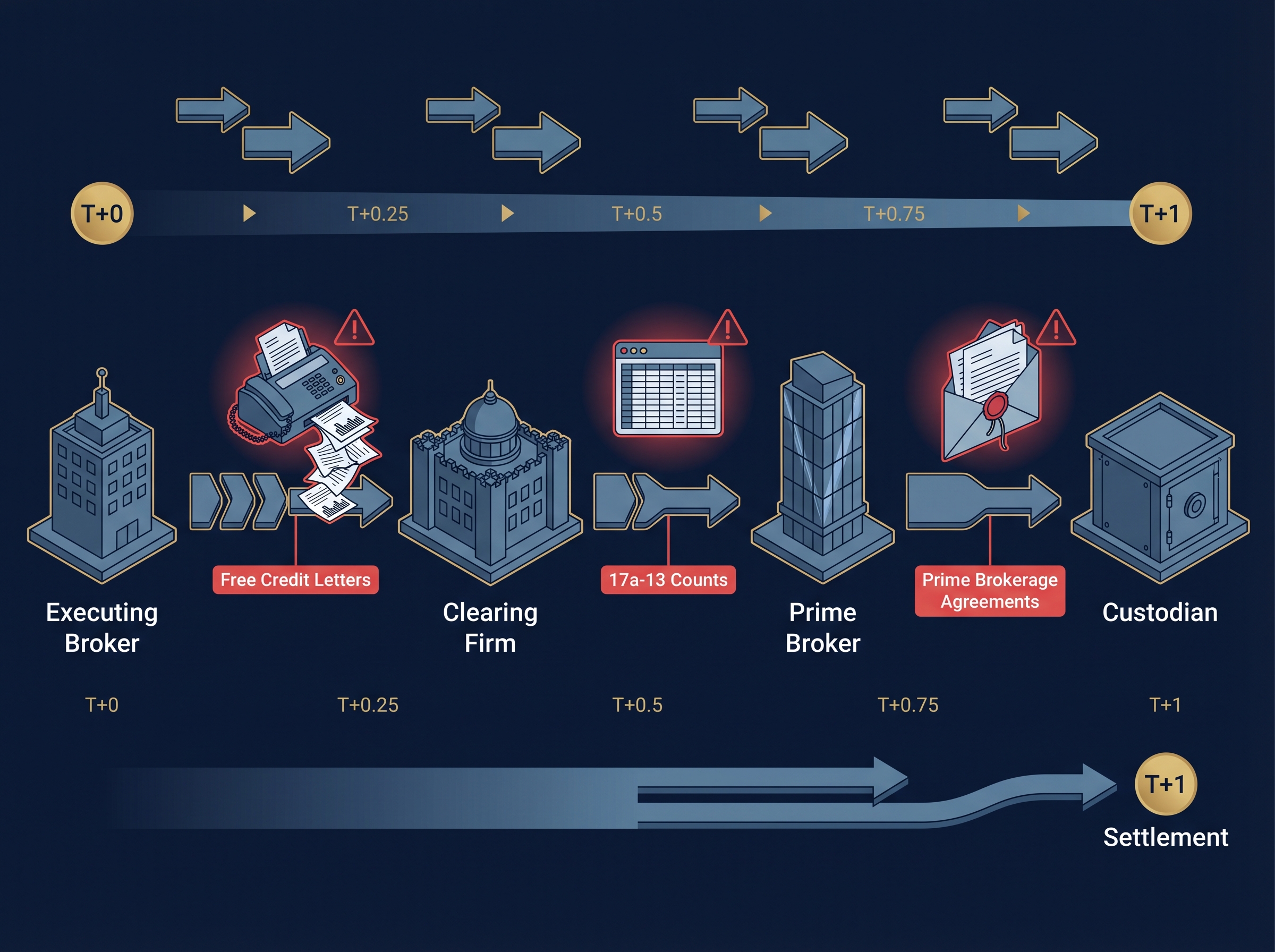
T+1 compressed settlement. DTCC and Broadridge run the rails. But the broker-to-broker workflows — free credit verification, quarterly securities counts, prime brokerage agreements — still run on email, fax, and spreadsheets. Loffa automates the gaps.
The Problem
T+1 Didn't Kill the Gaps. It Made Them More Expensive.
The move to T+1 shortened every settlement cycle, but the operational workflows between executing brokers, clearing firms, prime brokers, and custodians haven't kept up. When post-trade reconciliation breaks on T+0, there's no time to chase PDFs, fax confirmations, or SharePoint files. Manual processes that were tolerable at T+2 are now daily operational risk.
- ✗ Free credit balance letters sent by fax between executing and custodian brokers
- ✗ Quarterly securities counts (17a-13) reconciled in spreadsheets
- ✗ Prime brokerage agreements emailed as attachments and tracked by hand
- ✗ Aged fails and repo reconciliation stretched across multiple systems
- ✗ Audit evidence reconstructed from email archives after the fact
The Solution
The Layer Between Trading Systems and the Settlement Rails
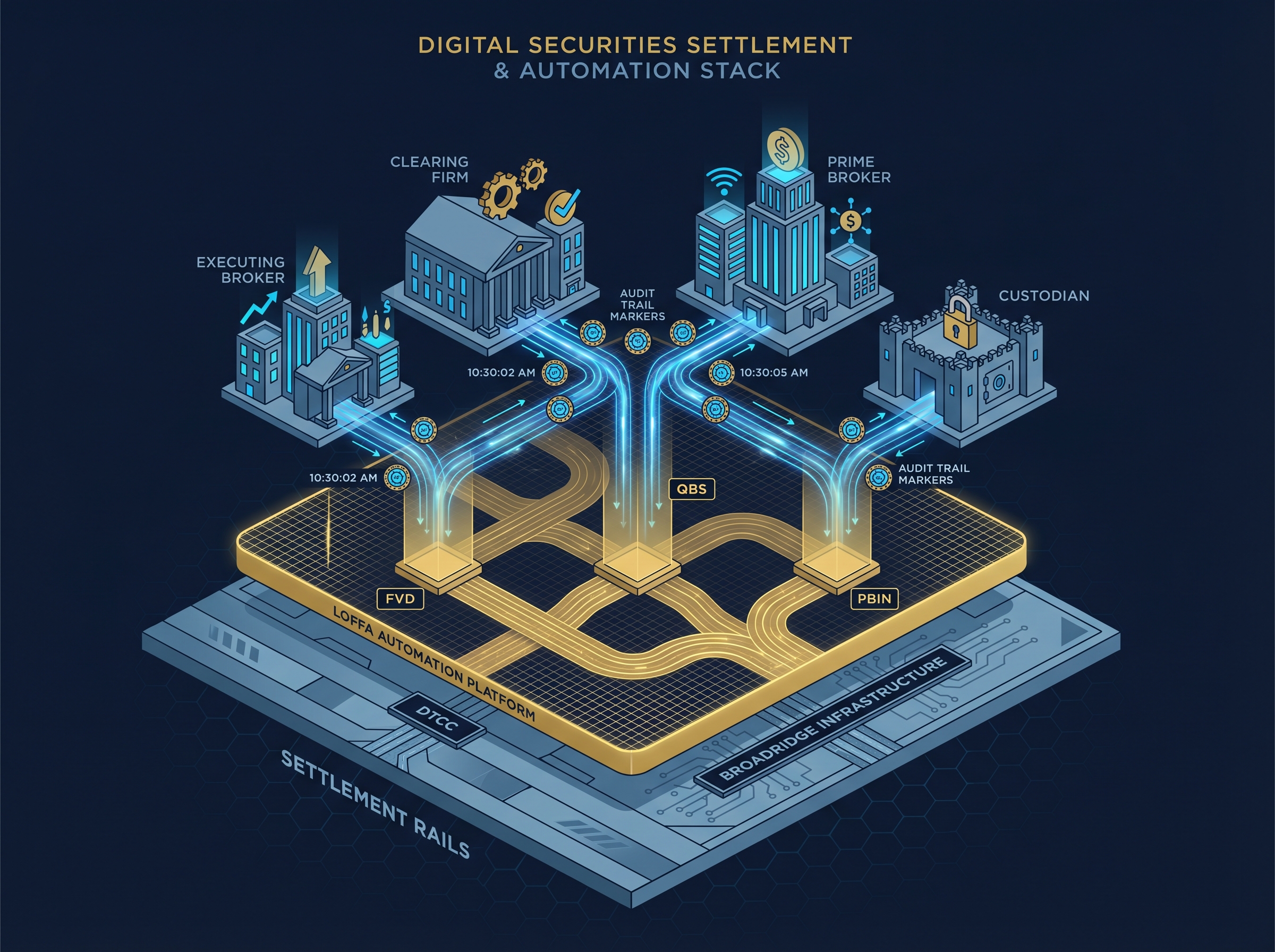
DTCC handles clearing and depository. Broadridge runs post-trade processing and SSI. Loffa automates the broker-to-broker operational workflows that sit between them — the confirmations, agreements, and counterparty verifications required by SEC and FINRA rules but not handled by the big infrastructure providers.
- ✓ Digital free credit balance verification under SEC 15c3-3 (FVD)
- ✓ Automated quarterly securities counts under SEC 17a-13 (QBS)
- ✓ Electronic prime brokerage agreements under FINRA 4311 (PBIN)
- ✓ WORM retention with instant retrieval — evidence for your 17a-4 obligations
- ✓ Cross-counterparty network — your counterparties already use Loffa
Three Pillars
The Broker-to-Broker Workflows Loffa Automates
Each pillar replaces a manual settlement workflow with a purpose-built, regulatory-grade platform.
Free Credit Verification
FVD automates the SEC 15c3-3 free credit balance letters exchanged between executing and custodian brokers. No more fax, no more PDF chase — just digital, audit-ready verification.
Explore FVD →Quarterly Securities Counts
QBS automates the SEC 17a-13 quarterly count cycle end to end — borrows, loans, repos, and aged fails — with WORM archival and 7-day difference resolution built in.
Explore QBS →Prime Brokerage Agreements
PBIN centralizes FINRA 4311 carrying agreements and SIA-150 / SIA-151 / F1SA forms across executing brokers, clearing firms, and prime brokers — one network, one audit trail.
Explore PBIN →Outcomes
Faster Closes. Fewer Breaks. Always Audit-Ready.
Settlement workflow automation measured by the things operations teams actually care about.
Hours
Not Days to Close Breaks
Automated verification and counterparty confirmation collapse reconciliation cycles from days to hours — critical when T+1 leaves no slack.
80%
Fewer Manual Touchpoints
Digital workflows remove the fax, PDF, and spreadsheet handoffs that consume operations staff and introduce errors.
Always
Exam-Ready Evidence
Time-stamped audit trails in WORM retention mean your firm is always ready for an SEC or FINRA examination — no post-hoc reconstruction required.
Automate Your Settlement Workflows
Schedule a settlement workflow assessment. We'll map the manual processes still running between your brokers and show you where automation delivers the largest operational and audit-readiness gains.